Fuel has always been a big operating expense for marine and industrial businesses. But with diesel prices remaining a concern across Australia, getting the most from every litre has become even more important.
Whether you’re operating a commercial vessel, running industrial machinery or relying on diesel-powered equipment, fuel consumption has a direct impact on your operating costs.
While you can’t control the price of diesel, there are practical ways to manage how much fuel your equipment uses.
It starts with understanding how efficiently your engine is performing.
The importance of fuel efficiency
Small improvements in fuel efficiency can make a difference over time.
Consider an engine consuming 100 litres of diesel per hour. At $2.00 per litre, that’s $200 in fuel for every operating hour. If consumption could be reduced by just 5% under comparable operating conditions, the saving would be $10 per hour. Across 1,000 operating hours, that’s a potential saving of $10,000.
Of course, actual consumption depends on the engine, application, load and operating conditions. But the example shows why fuel efficiency is vital.
So, where should operators start?
1. Make sure you’re using the right engine for the job
It begins with choosing an engine that’s correctly matched to its application. Whether you’re powering a commercial vessel, industrial machinery or a generator, the engine needs to suit the equipment’s operational needs.
An engine that isn’t matched to its workload may use more fuel than necessary. For marine operators, vessel weight, propeller selection, operating speed and typical load all influence consumption. Industrial applications have their own considerations, including power demand, duty cycles and operating hours.
At Oceania Power, we work with customers to identify Volvo Penta power solutions suited to their applications, helping them make informed decisions about performance, reliability and operating efficiency.
Planning a new installation or engine replacement? Speak with our team about choosing the right power solution for your requirements.
2. Regular maintenance helps protect fuel efficiency
When was the last time your engine received a proper performance check? Engines accumulate operating hours, so components such as filters, injectors and turbochargers can affect how efficiently they operate.
Restricted airflow, contaminated fuel filters or poorly performing components can reduce efficiency. Regular servicing helps keep these systems operating as they should, while allowing technicians to identify developing issues before they affect performance.
For Volvo Penta engines, following the manufacturer’s recommended maintenance schedule and using genuine replacement components can help maintain performance throughout the engine’s working life.
If your engine is due for attention, explore our guide to Volvo Penta parts and servicing.
3. Pay attention to how your engine is operating
For commercial vessels, unnecessary increases in speed can significantly increase fuel consumption. Operating at an appropriate cruising speed can help manage costs without compromising operational needs.
For industrial engines, reducing unnecessary idling and understanding changing load requirements can also make a difference. Modern engine management and monitoring systems provide useful information about engine speed, load, operating temperatures and performance.
By paying attention to this information, operators can identify opportunities to improve efficiency and make better decisions about how their equipment is used.
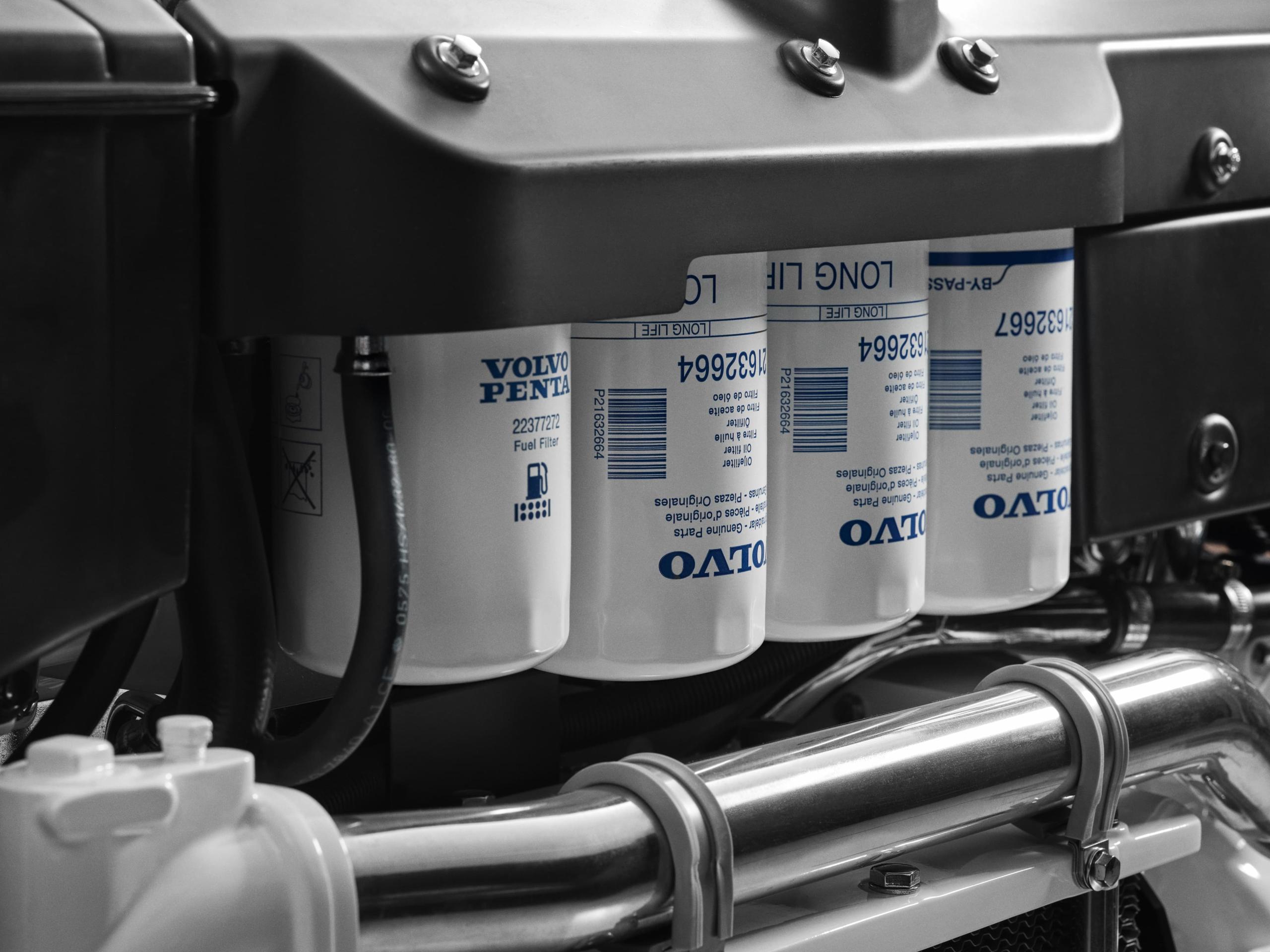
4. Don’t overlook genuine parts and filtration
Fuel efficiency is also about how effectively the engine uses it. Modern diesel engines rely on precisely engineered fuel injection, air intake and electronic control systems. Components that don’t meet the manufacturer’s specifications can affect how these systems perform.
Using genuine Volvo Penta filters and parts helps maintain correct filtration, compatibility and operating performance. It also supports engine reliability, which is especially important for commercial operators where unexpected downtime can be expensive.
Need genuine Volvo Penta parts? Contact Oceania Power for assistance identifying the correct components for your engine.
5. Consider the long-term value of newer engine technology
If you’re operating an older engine, it may be time to review whether newer technology could better suit your requirements. Advances in electronic fuel injection, engine management and propulsion systems have helped improve efficiency across many modern diesel engine applications.
For example, Volvo Penta’s D16 marine engine range incorporates advanced fuel injection and electronic engine management to support efficient operation.
However, the potential benefits of upgrading depend on the existing installation, operating profile and replacement costs. The important question isn’t simply whether a newer engine uses less fuel. It’s whether the overall investment makes sense for your operation.
Making every litre count
Whether you’re running a commercial vessel, industrial machinery or diesel-powered equipment, understanding fuel consumption and maintaining engine performance can help when it comes to long-term operating costs.
At Oceania Power, we support marine and industrial operators with Volvo Penta engines, genuine parts and technical expertise. From selecting the right power solution to maintaining an existing engine, our team will help you make informed decisions about performance, reliability and efficiency.
Want to reduce fuel costs and get more from your engine? Contact Oceania Power for expert advice on engine selection, maintenance and fuel-efficient power solutions for your marine or industrial operation.